Wednesday, September 30, 2009

Race, Ethnicity, and Film


When reading Race, Ethnicity, and Film by Robyn Wiegman, a few key ideas stuck with me. First, I learned of the different stereotypes associated with races in film and why these stereotypes came about. Mexicans were the violent greasers; Native Americans the savages that attack, rape, and pillage; African Americans the beasts that lust after white women. These stereotypes were formed to justify the U.S. acquisition of land from the Mexicans and Natives and to justify slavery and lynching of the African Americans. These stereotypes were present in the silent era.
Next, I came across the two ideas of role segregation and role stratification. Role segregation was the belief that non-white actors were ineligible for certain roles, because the white actors would move horizontally to play the roles defined as black, Asian, Native American, etc. Prior to the mid 1960s, white actors would play non-white characters to elude the codes that forbade the representation of interracial sexual relationships. This essentially defeated the purpose of the codes, but if it makes the viewers more at ease with the situation, then I guess that’s why the producers did it. Their goal is to make as much money as possible, and in order to do that they have to please their audience. Role stratification, a result of role segregation, was the belief that the non-white actors were locked into the minor roles in movies. Because it was the common practice for white actors to play a role no matter the character’s race, the non-whites did not get many lead roles. Uncle Tom’s Cabin, produced in 1927 and pictured above, was labeled a “breakthrough” film because the lead character was a black man, and the part was actually played by a black man.
The reading also pointed out how today directors like Spike Lee are willing to cash in on “ethnic” markets, and how they have moved away from the stereotypes and segregations of the past. Again, filmmaking is just like any other business, it’s all about making money.

Monday, September 28, 2009


frayattack-debry.jpg


In this image, the stereotype of the "blood-thirsty" Indian is seen. Here, Indians are murdering innocent Spaniards. This acted as a way to justify the cruel treatment of the Indians.


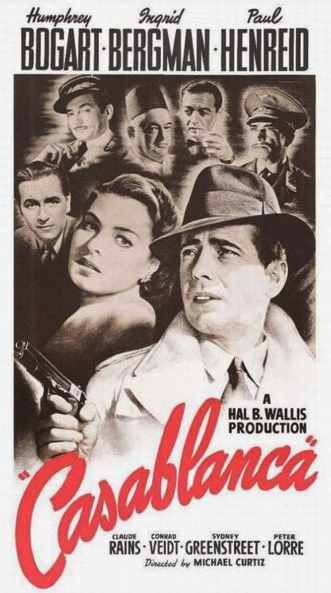
In the recent readings, I paid special attention to the essay regarding race and ethnicity. I found it very interesting to read about the history of racism in Hollywood. For example, I never realized how many stereotypes existed in Hollywood movies. These stereotypes included the blood-thirsty Indian, the Latino greaser, the Mexican gangster, and the violent African American. These roles are quite offensive, and they only acted as a way to validate cruel treatment of these races. I was also surprised to find out that Hollywood knew relatively little about other cultures. For example, all indian tribes are portrayed in the same fashion. They live in tipis; they hunt buffalo. In reality, indian tribes are extremely different. Very few live in tipis, and they all speak different languages and wear different clothes. It is offensive that Hollywood took no time to learn about these differences. That is like saying everyone that lives in the South is extremely racist. It is a broad generalization that is only true for a small percentage of people. I also found it upsetting that only white actors could play major roles. Non-whites had to be satisfied with the subordinate roles. This is seen in Casablanca when Sam plays the subordinate role of the piano player in the cafe. All the major roles went to white actors. Even when the major role was meant for a person of another race, a white person would just wear the proper makeup so he or she looked Asian or African American. It took a while for the major roles to open up to all races. When it did, America was finally able to learn about other cultures. Thankfully, we now have an integrated cinema. We have seen different races play major roles and do a phenomenal job. This can be seen in Denzel Washington's performance in Remember the Titans or Jackie Chan's performance in Rush Hour. The more integrated Hollywood becomes, the more America will learn about other cultures. This will help us be more well-rounded, because, lets face it, a large percentage of the Americans don't read. We need these movies.

Sunday, September 27, 2009

Christopher Nolan's Memento

After Hollywood transitioned out of its classical period, a significant shift in trends occurred. The protagonist shifted from being a generic, stoic and moral male to a broad range including females and anti-heroes. Another important change was the shift from a standard chronological plot line to much less predictable non-linear plot lines. Memento incorporates all of these changes to create a perfect example of post-classical Hollywood cinema.
The movie begins with a shot played in reverse of a Polaroid photo developing to set a tone of confusion and to prepare the viewers to pay close attention to all events of the film. The story is told in two different parts: a series of short color scenes that are chronologically reverse and a series of short black and white scenes chronologically forward. The color scenes begin with the main character, Leonard, killing a man, Teddy, inside a rundown house. As the scenes progress backwards, various aspects of Leonard's past such as his inability to form new memories and the events leading up to Teddy's death are revealed. The black and white scenes show Leonard talking on the phone with an unknown person. The non-linear story keeps the viewer watching for every little detail that could connect all the events of the story and make sense of Leonard's confused life.
Initially, the film reveals Leonard to be a sympathetic character trying to avenge his wife's rape and murder. As the story progresses backwards and more details are reviewed, Leonard becomes less sympathetic and is revealed to have killed several men, each of which he was either tricked into killing by others or tricked himself into killing just so he could achieve a temporary satisfaction of knowing his wife's killer was dead. Initially portrayed to be a man seeking righteous vengeance, Leonard eventually is shown to be a selfish man far from a standard protagonist. The combination of the non-linear plot line and non-traditional make Memento a memorable post-classical film.

Wednesday, September 23, 2009

Casablanca and Classical Hollywood Narrative


The last time I saw Casablanca, the movie was projected on a blow-up screen on our high school football field. I did not pay the movie the attention it deserves- it was late, I was there with friends, and I hadn't taken a film class.

This time around, I couldn't help but notice certain characteristics of the film that marked its age and style.

Casablanca followed classically styled plot closely. The exposition, even with a number of scenes introducing Casablanca prior any of the main characters, fit well within the traditional ¼ of the movie. I almost laughed when the material storyline, focused on leaving Casablanca, was introduced by Rick's receipt of the writs of transit. Of course, the emotional storyline was then introduced by Ilsa's entrance and Rick's reaction to her presence- neat motivation for the film's complication and eventual resolution.

Certain facts, key to the story, were also repeated a number of times- often without necessity. A movie wouldn't be classic Hollywood without being patently obvious, and Casablanca is definitely classic Hollywood. Rick's former occupation as a gun runner and mercenary were mentioned at least twice, in detail, as was the importance of Laszlo's work.

Though it's easy to rail against this sort of cinema, I also had a chance to see the film's effect on a loved one- and she really enjoyed it. For all the low-hanging criticism that came with a second viewing, I must admit that I did, too.

Friday, September 18, 2009

Readings and Presentation


This week we read about Classical Hollywood Cinema in class and this blog group gave a presentation on it. - Classical Hollywood Cinema was a very interesting read. Usually one would not think about the process of film making over time in Hollywood, however cinema has progressed and changed tons of the decades. At first, motion pictures were shown of one screen, no sound, and no cuts/different shots. Everything was one continuous picture where words had to be displayed to help the audience follow along. Eventually sound was established so the audience could hear emotion and other important sounds to understand a film. Then, special effects, different types of shots, different angles, etc. were added to put more emphasis on characters and the theme of the movie. Cinema has grown so much over time, and it's amazing to see how it has adapted throughout the decades.

Monday, September 14, 2009

Classic Casablanca

This week, I watched Casablanca for the first time, and I really enjoyed it. What struck me most about the film was how it acted as the perfect example of a classic Hollywood movie. This can be seen through the romantic aspect as well as the target audience. In regards to romance, a typical happy ending is reached. Rick does the right thing by letting go of his true love and sending her off with her husband. While it may be a little upsetting, this is overall the happy ending that the classic Hollywood audience expects. Classic Hollywood style is also seen in regards to the target audience. The movie Casablanca is targeted towards the nineteen year old male. There is plenty of action, suspense, and drama that works to attract a young man to this film. In classic Hollywood theory, if the nineteen year old male enjoyed the film, then women as well as younger boys would enjoy it too.

Friday, September 11, 2009

House of Flying Daggers


House of Flying Daggers is a Chinese martial arts film set during the Tang Dynasty. Like most martial arts films it features several fight scenes with highly stylized and improbable fighting techniques, a 'secret' society, and romance. Although House of Flying Daggers shares many similarities with other martial arts film on the surface, it has several characteristics that set it apart. Throughout the film all characters wore extremely intricate costumes. The details in their clothing added a very foreign and elegant touch along with a Chinese authenticity. Zhang Yimou's movie also features extremely vibrant colors while most other films in the genre tend to paler and more sepia-tone colors. The colors emphasize both the characters and the enviroment. Zhang essentially pays homage to Mother Nature by using such detail to capture the background. House of Flying Daggers, while part of a genre known for poor acting and poor production, stands out due to the passion of the actors, beautiful colors, and a highly dedicated director.

Monday, September 7, 2009

One More Jaws Response


There were quite a few long shots present in Steven Spielberg's film Jaws. Many of these long shots included the shark. One example of this was the man in the small boat at the beginning who was presented in the foreground, while the shark was swimming towards him in the background. We were able to see the entire scene and realize the man had no idea the shark was on the attack. Regarding camera angles, when the boat captain, Quint, was being eaten by the shark, we saw this from a high angle to emphasize his vulnerability and loss of power. This reinforced the view of the shark as the most powerful character, because it killed the "experienced" man who was in control of the trip. A still shot from this scene is presented above. Music, not a part of mise en scene, was also an important part of the film. The viewer would always know when the shark was about to enter the scene, because the infamous, eerie melody would be played.

Wednesday, September 2, 2009

Jaws Video Response

In the beginnning, there was a shot of a teenage girl swimming. It is at night, but the moon creates a dim blue color on the ocean which off sets the girl's distant black figure swimming in the huge ocean. This gives the feeling that the girl is vulnerable to the water and what is lurking beneath, and eventually, the teenage girl is killed by a shark. This opening scene sets the plot for the rest of the movie, and starts it off with an scary/ thriller theme.
Another important theme in Jaws is when the chief of police, the main character, has a fear that is prominent throughout the movie. He lives at the beach but is afraid of the ocean. The theme is that he has a fear that is around him every day and he has not overcome the fear. Jaws represents his fear of the ocean. However, when he goes out on the boat to help kill the shark, he is facing his fear, and when he kills the shark at the end it is symbolizing that he hass conquered his fear.

Tuesday, September 1, 2009

Jaws Video

http://www.youtube.com/watch?v=T4Jdfy3xrzs

Response to Jaws

The main thing I noticed while watching this film was the director's use of montage, which is especially evident during the shark attack scenes. The director starts by showing a swimmer above the water. This shot includes the face, shoulders, and possibly arms. Cheerful music is playing in the background, and families are laughing and playing. The director then cuts to the underwater view. Here, the shot focuses on the swimmer's legs. At first, the scene is silent. After a few seconds, however, the foreboding music begins. As the director switches between these two views, the underwater music grows louder and louder until the shark attacks. Then, blood fills the water, and the director cuts to an object that the victim was in possession of. For example, after the little boy was eaten, the director shows a shot of the torn yellow raft. Also, after the dog was eaten, the director flashes to the stick the dog was retrieving. This final shot reassures the viewer that the victim is in fact dead. The use of montage in these scenes is extremely effective. It allows the viewer to focus on the main conflict within the scene, while also creating an immense amount of suspense. In regards to the attached film, look at the attack that occurs between 1:00 and 1:30. This is a great example of montage.