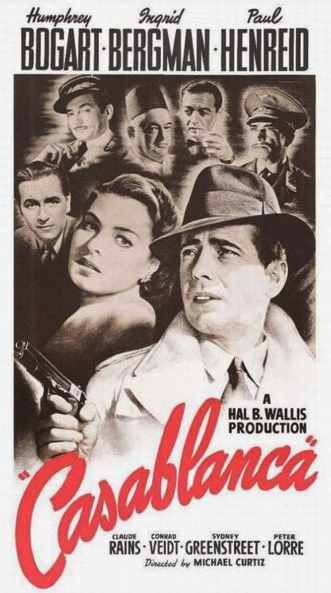
The last time I saw Casablanca, the movie was projected on a blow-up screen on our high school football field. I did not pay the movie the attention it deserves- it was late, I was there with friends, and I hadn't taken a film class.
This time around, I couldn't help but notice certain characteristics of the film that marked its age and style.
Casablanca followed classically styled plot closely. The exposition, even with a number of scenes introducing Casablanca prior any of the main characters, fit well within the traditional ¼ of the movie. I almost laughed when the material storyline, focused on leaving Casablanca, was introduced by Rick's receipt of the writs of transit. Of course, the emotional storyline was then introduced by Ilsa's entrance and Rick's reaction to her presence- neat motivation for the film's complication and eventual resolution.
Certain facts, key to the story, were also repeated a number of times- often without necessity. A movie wouldn't be classic Hollywood without being patently obvious, and Casablanca is definitely classic Hollywood. Rick's former occupation as a gun runner and mercenary were mentioned at least twice, in detail, as was the importance of Laszlo's work.
Though it's easy to rail against this sort of cinema, I also had a chance to see the film's effect on a loved one- and she really enjoyed it. For all the low-hanging criticism that came with a second viewing, I must admit that I did, too.

No comments:
Post a Comment